If you’re working on a home improvement project, buying flooring, installing fencing, or measuring fabric, you’ve probably asked: how to calculate linear feet? It sounds technical, but the concept is actually simple once you understand it.
- What linear feet means
- How to calculate linear feet step by step
- Linear feet formula
- How to convert square feet to linear feet
- Linear feet vs square feet vs board feet
- Real-life examples
- Common mistakes to avoid
- Handy conversion tips
By the end of this article, you’ll confidently measure and calculate linear feet for any project.
What Is a Linear Foot?
A linear foot is a measurement of length equal to 12 inches. Unlike square feet (which measure area) or cubic feet (which measure volume), linear feet measure distance in a straight line.
Think of it this way:
- Measuring a wall’s length → Linear feet
- Measuring floor area → Square feet
- Measuring storage space → Cubic feet
If you measure something straight from one end to the other, you’re measuring in linear feet.
Why Is Linear Foot Measurement Important?
Understanding how to calculate linear feet is essential for:
- Flooring installation
- Carpet measurement
- Fence installation
- Lumber purchases
- Kitchen cabinet installation
- Fabric buying
- Baseboards and trim
- Roofing materials
Contractors, carpenters, interior designers, and DIY homeowners use linear feet regularly.
Linear Feet Formula
The basic formula is very simple:
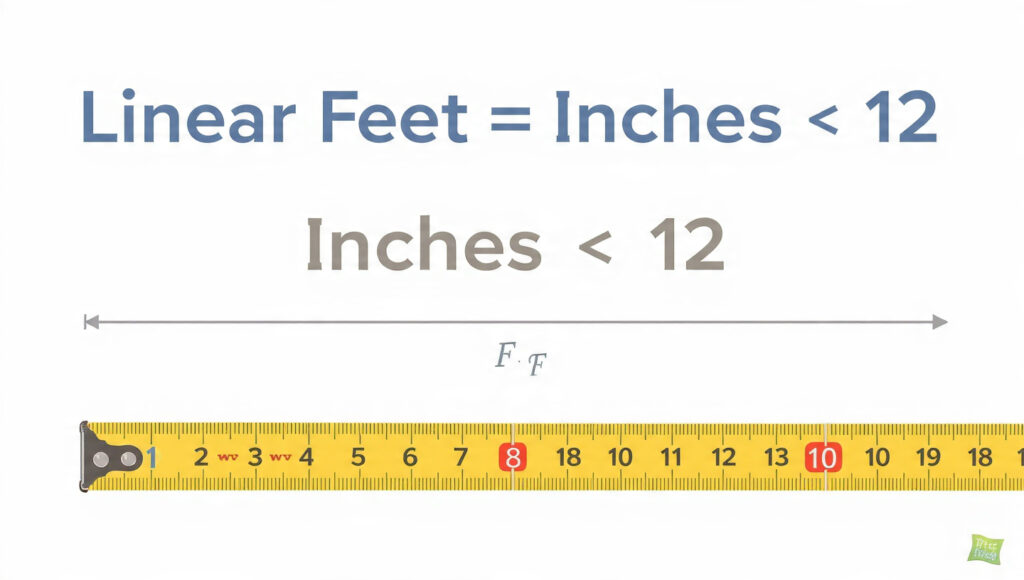
Linear Feet = Total Length in Inches ÷ 12
Or if you’re measuring in feet already:
Linear Feet = Length (in feet)
That’s it.
How to Calculate Linear Feet (Step-by-Step)
Step 1: Measure the Length
Use a measuring tape to measure the total length of the object or space.
For example:
- A wall = 15 feet
- A fence = 42 feet
- A countertop = 8 feet
If your measurement is in inches, convert it to feet.
Example:
- 240 inches ÷ 12 = 20 linear feet
Step 2: Add Multiple Sections (If Needed)
If you are measuring multiple walls or sections, add them together.
Example:
- Wall 1 = 10 feet
- Wall 2 = 12 feet
- Wall 3 = 8 feet
Total Linear Feet = 10 + 12 + 8 = 30 linear feet
Step 3: Double Check Measurements
Always measure twice to avoid costly mistakes.
How to Calculate Linear Feet for Flooring
Many people confuse linear feet with square feet when installing flooring.
Here’s the difference:
- Square Feet = Length × Width
- Linear Feet = Length only
If flooring material is sold by width (like 12-foot wide carpet), then:
Linear Feet = Total Square Feet ÷ Width of Material
Example:
Room Size: 240 square feet
Carpet Width: 12 feet
240 ÷ 12 = 20 linear feet
How to Convert Square Feet to Linear Feet
To convert square feet to linear feet, you need to know the width.
Formula:
Linear Feet = Square Feet ÷ Width (in feet)
Example 1:
300 square feet of flooring
Width = 10 feet
300 ÷ 10 = 30 linear feet
How to Calculate Linear Feet for Fencing
For fencing, measure the perimeter of the area.
Example:
- Side 1 = 50 ft
- Side 2 = 40 ft
- Side 3 = 50 ft
- Side 4 = 40 ft
Total Linear Feet = 50 + 40 + 50 + 40 = 180 linear feet
Always add 5–10% extra for waste.
How to Calculate Linear Feet for Lumber
When buying lumber from stores like The Home Depot or Lowe’s, boards are often sold in linear feet.
If you buy:
- 5 boards
- Each board is 8 feet
Total Linear Feet = 5 × 8 = 40 linear feet
Linear Feet vs Square Feet
| Measurement Type | What It Measures | Formula |
|---|---|---|
| Linear Feet | Length | Length only |
| Square Feet | Area | Length × Width |
| Cubic Feet | Volume | L × W × H |
This confusion is common when planning renovations.
Linear Feet vs Board Feet
Board feet measure lumber volume.
Formula:
Board Feet = (Thickness × Width × Length) ÷ 12
Linear feet measure only length, while board feet measure wood volume.
Real-Life Examples
Example 1: Baseboards
Room measurements:
- 12 ft
- 14 ft
- 12 ft
- 14 ft
Total = 52 linear feet
Add 10% extra:
52 × 1.10 = 57.2 → Buy 58 linear feet
Example 2: Fabric
If fabric width is 5 feet and you need 100 square feet:
100 ÷ 5 = 20 linear feet
Example 3: Kitchen Cabinets
If you’re installing cabinets along a 16-foot wall, you need 16 linear feet of cabinets.
Common Mistakes When Calculating Linear Feet
- Confusing square feet with linear feet
- Forgetting to convert inches to feet
- Not adding extra for waste
- Measuring uneven walls incorrectly
- Ignoring obstacles like doors and windows
Avoid these to save money and materials.
Linear Feet Conversion Chart
| Inches | Linear Feet |
|---|---|
| 12 | 1 ft |
| 24 | 2 ft |
| 36 | 3 ft |
| 48 | 4 ft |
| 60 | 5 ft |
| 120 | 10 ft |
Pro Tips for Accurate Measurement
- Use a metal measuring tape
- Measure twice
- Write everything down
- Round up, not down
- Add 5–15% extra material
Frequently Asked Questions
What is 10 linear feet?
It simply means 10 feet in length.
How many square feet is 10 linear feet?
You need width to calculate square feet.
If width = 2 feet:
10 × 2 = 20 square feet
How do you calculate linear feet for a room?
Add all wall lengths together.
Is a linear foot the same as a regular foot?
Yes. A linear foot is exactly 12 inches.
When Should You Use Linear Feet?
Use linear feet when measuring:
- Fencing
- Trim
- Pipes
- Cables
- Countertops
- Shelving
- Lumber
Final Thoughts
Learning how to calculate linear feet is simple but incredibly important for construction, renovation, and DIY projects. Once you understand that linear feet measure only length, everything becomes easier.
Remember:
Linear Feet = Total Length in Feet
Or
Linear Feet = Inches ÷ 12
Whether you’re installing flooring, buying lumber, or measuring fabric, accurate linear foot calculation helps you save time and money.
Now you can confidently measure any project like a pro.